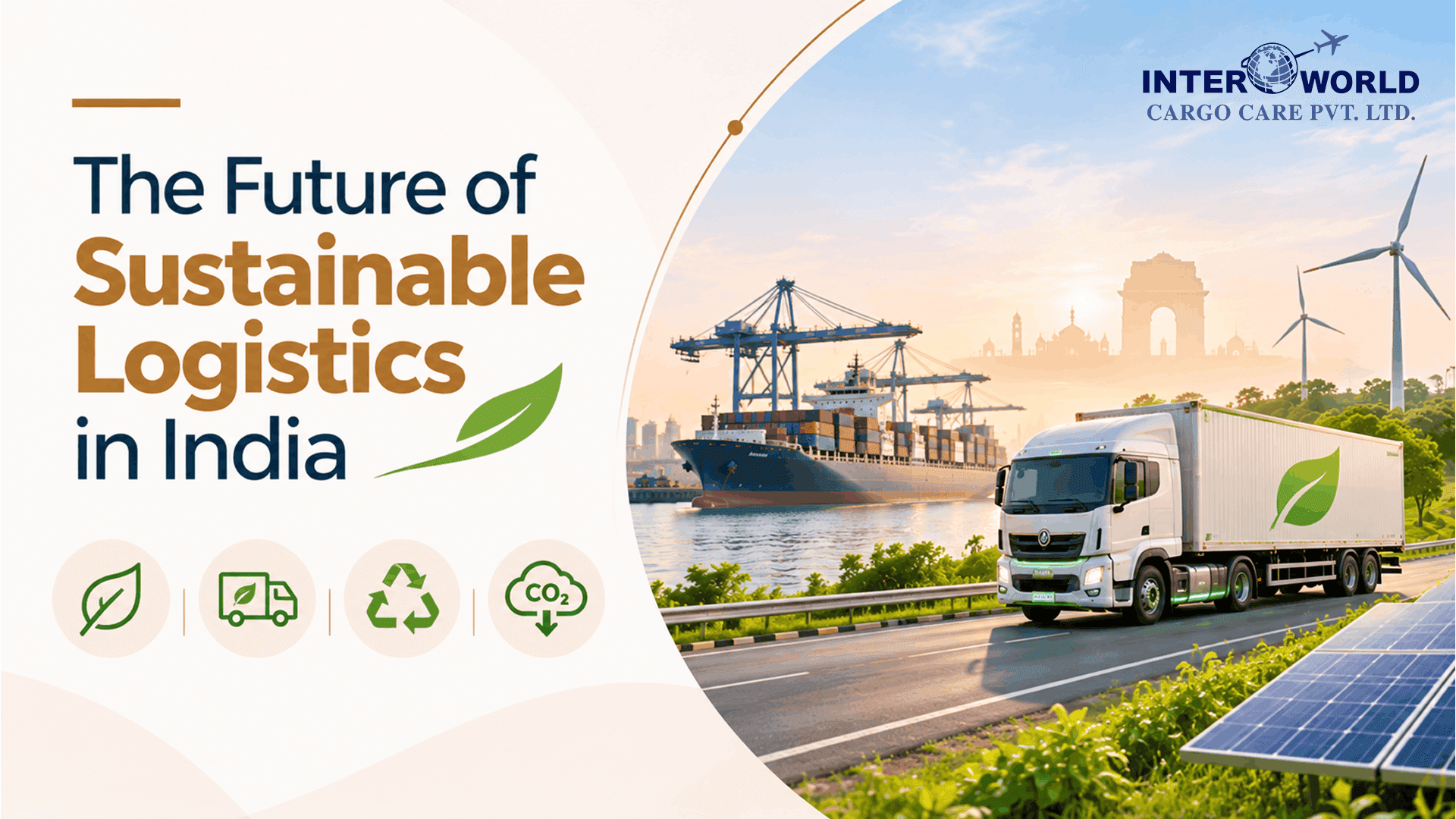
Every shipment leaves a footprint, and the choices that shape it are made long before the cargo moves. Which mode you book, how full the container is and how the goods travel inland all affect emissions as much as they affect cost. For Indian exporters and importers, the good news is that the greener choice is often the cheaper one too.
Choose the Right Mode for the Deadline
Air freight is the fastest way to move goods, and it is also the most carbon intensive. Per tonne of cargo, sea freight produces a small fraction of the emissions of air. When a shipment is not truly urgent, planning a few extra weeks of lead time so it can travel by sea is the single biggest step most shippers can take.
A split approach works well for many businesses. Send a small first batch by air to meet an urgent launch or order, and move the bulk of the stock by sea. Our air freight and sea freight teams can plan a split shipment like this.
Fill Containers, Not Air
Half-empty containers and oversized cartons mean more space, more weight and more trips for the same amount of product. Better use of space cuts emissions and freight cost at the same time.
- Consolidate smaller shipments. If you ship small volumes often, LCL consolidation lets your cargo share a container instead of travelling in one that is mostly empty.
- Right-size your packaging. Cartons that fit the product closely, and pallets that fit the container well, let more goods travel in the same space.
- Plan full loads. Combining orders into fewer, fuller shipments often costs less per unit than many small ones.
Use Rail for Long Inland Legs
For cargo moving between an inland city and a port, rail is generally cleaner than road over long distances. India's Dedicated Freight Corridors and the network of inland container depots make it easier to move containers by rail and finish the journey by road over a short final leg. Whether rail suits your shipment depends on the route, the timing and the location of your factory or warehouse.
Work With Carriers That Are Cutting Emissions
As a freight forwarder, IWCC does not run its own trucks, ships or aircraft. We book space with airlines, shipping lines and road and rail transport partners. That gives us a choice on every shipment, and we can help you compare options where carriers offer newer, more efficient vessels and aircraft, or report the emissions of your cargo.
Go Paperless
Digital documentation reduces paper and courier runs, and it speeds up clearance. Electronic filing of shipping bills and bills of entry through ICEGATE, along with e-way bills for domestic movement, means less time for cargo waiting at ports and for vehicles idling at gates. Faster clearance is better for your timelines and for the environment.
Key Takeaways
- Sea freight has a far smaller footprint than air, so plan ahead where you can.
- Consolidation and right-sized packaging put more goods in the same space.
- Rail is often the cleaner choice for long inland legs to and from ports.
- The right carrier and paperless clearance reduce emissions and delays.
Sustainable shipping comes down to planning. If you would like help finding a greener and more cost-effective way to move your cargo, contact our team and we will look at your routes and options with you.