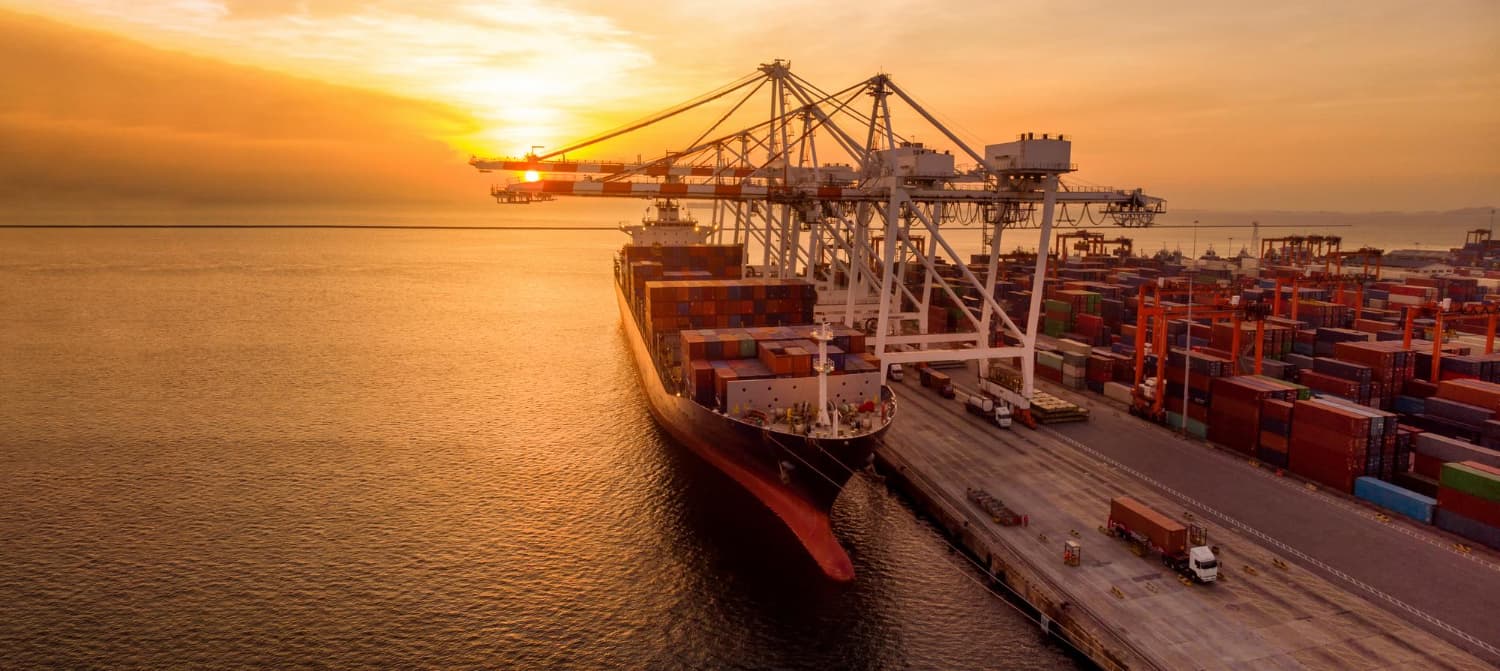
If your cargo fills most of a container, or if you ship the same goods every month, a full container is usually the simplest and safest way to move it. That option is called FCL shipping. This guide explains what FCL means, how the cost is built up, where it works best and what to watch for before you book.
What does FCL mean in shipping?
FCL stands for full container load. You book an entire container for your own cargo. Nobody else's goods go inside it. The container is loaded at your factory or warehouse, sealed and opened again only at the destination, usually in front of the consignee or customs.
Two sizes are common. A 20 foot container holds around 31 cubic metres, and a 40 foot container holds roughly double. Cargo that is heavy, such as tiles or metal parts, may reach the weight limit of the container before it fills the space.
You can still book an FCL container when your cargo does not fill it. You pay for the whole box either way, so the choice depends on cost and risk, not only on volume.
How FCL shipping works
- Booking. You give your forwarder the cargo details, origin, destination and preferred sailing. The forwarder books the container with a shipping line.
- Empty container pickup. The line releases an empty container to your forwarder, who sends it to your premises.
- Stuffing. Your team loads the container. The forwarder or a surveyor can supervise this. For export, the container is then sealed.
- Gate in. The loaded container is trucked to the port or inland container depot and enters the terminal before the cut-off.
- Customs. Export documents are filed and customs gives permission to load. Our customs clearance team manages this stage.
- Sea transit. The container sails on the booked vessel.
- Destination clearance and delivery. The consignee files the import declaration, pays duty, collects the delivery order and moves the container out of the port.
Because the container is loaded once and sealed, there are fewer handovers than in shared shipping.
What does FCL shipping cost?
FCL freight is priced per container, not per cubic metre. The cost has a few layers:
- Ocean freight. The base rate for the route and container size. It moves with demand, season and fuel.
- Origin charges. Terminal handling, documentation, customs clearance for export, seal and trucking to the port.
- Destination charges. Terminal handling at the port of arrival, delivery order fee and local trucking.
- Surcharges. Fuel, currency, peak season and port congestion charges, depending on the line and lane.
- Duty and taxes. Not part of freight, but part of your landed cost on imports.
Local port charges can be significant in India. A 2025 carrier tariff listed origin terminal handling at Nhava Sheva at ₹8,200 for a 20 foot container and ₹13,100 for a 40 foot container. Treat figures like these as a guide only, since lines revise them often. Always ask for a quote that shows every line. Our post on how to calculate international freight charges explains how to compare quotes.
Benefits of FCL shipping
- Lower risk of damage and loss. Your cargo is loaded once and stays sealed until it arrives.
- Faster transit. There is no waiting for a consolidation to fill or for cargo to be separated at the destination.
- Better cost per unit at volume. Once your cargo approaches a full box, a flat container rate beats per cubic metre pricing.
- More control. You decide the loading date, the packing method and the sealing process.
- Easier tracking. One container number follows one consignee's goods from gate to gate.
- Fewer cargo restrictions. Many goods that a shared container will not accept can travel in a dedicated one, subject to line rules.
Limitations to plan for
- You pay for the whole container even if it is not full.
- Small, frequent orders can lock up cash in large purchases.
- Port storage and container delay charges apply if clearance slips.
- Poor loading wastes space or leaves cargo free to shift in transit.
FCL vs LCL: which should you choose?
| Factor | FCL | LCL |
|---|---|---|
| Container | Yours alone | Shared |
| Pricing | Per container | Per cubic metre or tonne |
| Best volume | Roughly above 15 cubic metres | Under 15 cubic metres |
| Transit | Faster | Longer, due to consolidation |
| Handling | Loaded and sealed once | Several touchpoints |
| Cargo safety | Higher | Lower |
Many importers treat 14 to 15 cubic metres as the point where a full container starts to make sense. Ask for both quotes when your cargo is near that range. Our guide to LCL shipping and when to use it covers the shared option in full.
Common FCL use cases
- Regular manufacturing inputs. Raw materials or components that arrive every month in predictable volumes.
- Bulky or heavy goods. Furniture, tiles, machinery parts and building materials.
- High value or fragile cargo. Electronics, glassware and anything that suffers from repeated handling.
- Retail and ecommerce restocks. Seasonal inventory that is bought in large lots from one supplier.
- Export orders for a single buyer. A full order packed at your factory and delivered in one container.
How to avoid demurrage and detention
Two charges catch many first-time FCL shippers. Demurrage applies when a container stays in the terminal beyond the free time, and detention applies when it stays outside the terminal. Both are charged per container per day, and rates often rise after the first few days.
You can reduce the risk with a few habits:
- Ask for the free days before you confirm a booking, and negotiate more if your route is slow.
- Send the commercial invoice, packing list and bill of lading to your clearance team while the vessel is still at sea.
- Check the HS code and duty before shipment, so the declaration is right the first time.
- Plan trucking and warehouse space before the container arrives.
- Return empties promptly once unloaded.
Our checklist for first-time importers lists the documents to prepare early.
How IWCC handles FCL shipments
Interworld Cargo Care has worked with shipping lines since 1993 and now partners with more than 50 of them. Our sea freight team handles booking, container planning and port coordination for FCL and LCL cargo. If you want pickup from your factory and delivery to the consignee, our door to door service puts those steps under one point of contact. For cargo that must wait before dispatch, we also offer bonded and general warehousing.
Get an FCL quote
Share your cargo type, volume and route, and we will compare FCL and LCL costs for your shipment. Request a free quote or call 098110 59654.