Moving goods across borders involves airlines, shipping lines, ports, truckers, customs and insurers, each with their own rules and paperwork. Most businesses do not have the time or the contacts to manage all of that themselves. A freight forwarder does it for them.
This guide explains what freight forwarding is, what a forwarder actually does, the types of service, how the process runs from booking to delivery and what to look for when you pick one.
What is freight forwarding?
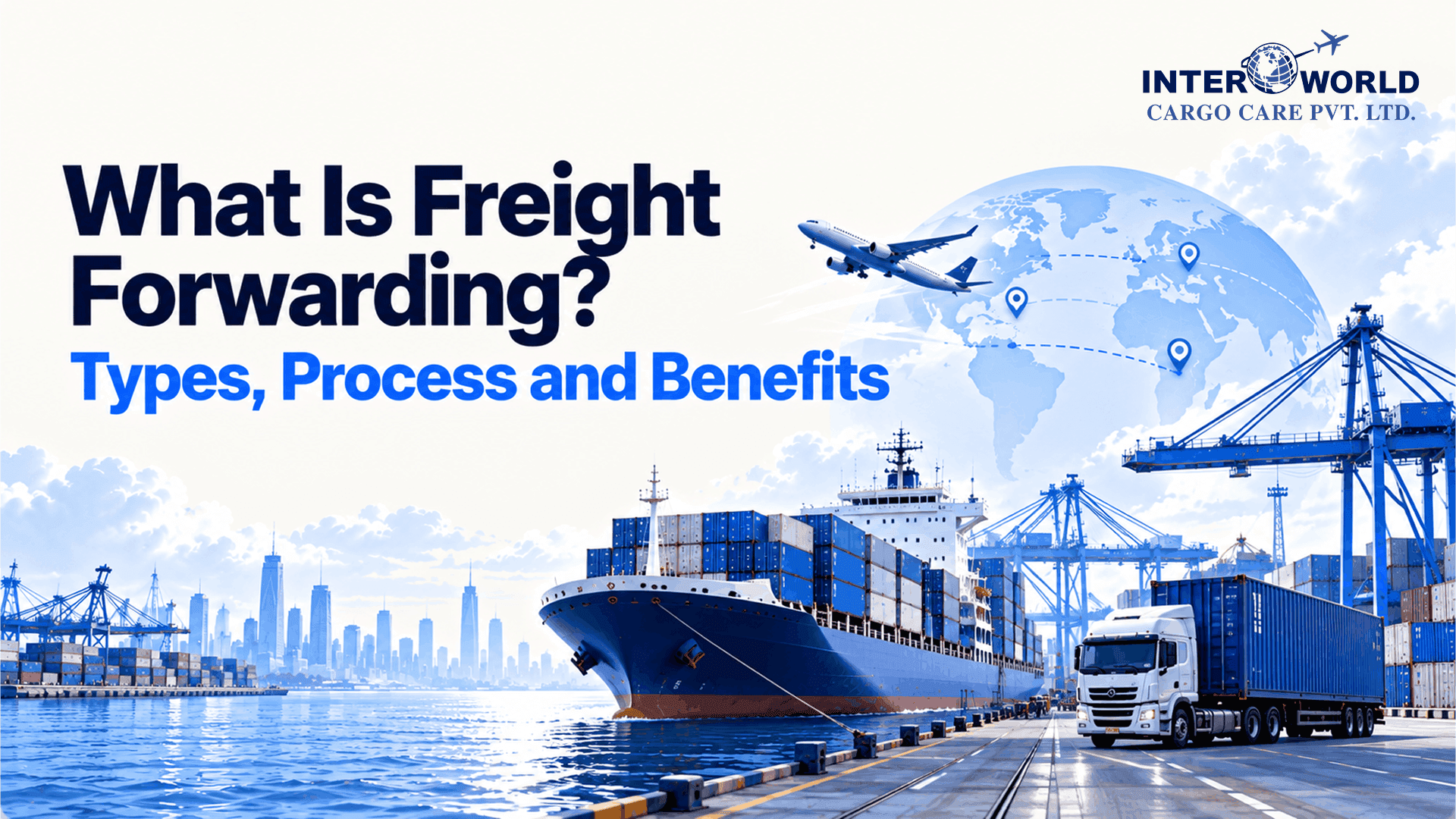
Freight forwarding is the planning, booking and coordination of cargo movement from one place to another, usually across borders. A freight forwarder does not usually own the ships or planes. It buys space from carriers, arranges the pieces of the journey and manages the documents, so the shipper deals with one party instead of many.
Freight forwarder definition and role
A freight forwarder is a company that organises shipments on behalf of exporters and importers. Think of it as a travel planner for cargo. The role covers:
- Advising on the best mode, route and Incoterm for the shipment
- Booking space with airlines, shipping lines and truckers
- Preparing transport documents such as the bill of lading or airway bill
- Arranging cargo packing, labelling and consolidation
- Handling or coordinating customs clearance
- Arranging cargo insurance
- Tracking the shipment and reporting delays
- Arranging delivery to the final address
In logistics, the forwarder sits between the shipper and the carrier, and it often becomes the single point of contact when something goes wrong.
Types of freight forwarding
By mode
- Air freight forwarding. For urgent, high value or light cargo. Priced on chargeable weight.
- Sea freight forwarding. For larger or heavier cargo. Covers full container loads (FCL), shared containers (LCL) and bulk or breakbulk cargo.
- Road and rail forwarding. Used for cross-border trucking, inland container movement and first or last mile legs.
- Multimodal forwarding. Combines modes in one journey, such as sea to rail to truck, under a single contract.
By service scope
- Port to port or airport to airport. The forwarder moves cargo between two terminals only.
- Door to door. The forwarder manages pickup, freight, clearance and delivery.
- Customs brokerage. Filing declarations and paying duty, often combined with forwarding.
- Warehousing and distribution. Storage, inventory handling, labelling and onward dispatch.
- Project cargo. Oversized or heavy equipment that needs special planning.
By ownership
- Asset-based forwarders own some trucks, warehouses or containers.
- Non-asset forwarders work through partners and carriers. Most forwarders are a mix of both.
How the freight forwarding process works
- Enquiry and quote. You share cargo details, origin, destination and timeline. The forwarder compares options and sends a quote.
- Booking. Once you confirm, the forwarder books space with the airline or shipping line.
- Pickup and packing. Cargo is collected, packed or consolidated, and labelled.
- Export documentation and clearance. The forwarder or its customs partner prepares the documents and files the export declaration. See our guide on what a shipping bill is for the Indian export side.
- Main carriage. The cargo travels by air, sea or land.
- Transhipment and tracking. If cargo changes vessel or flight, the forwarder tracks each handover.
- Import clearance. Customs at the destination assesses the shipment and duty is paid.
- Final delivery. Cargo goes to the consignee's address, and the forwarder closes out the paperwork.
For a wider view of the stages, read our step by step guide to the import-export process in India.
Benefits of using a freight forwarder
- Better rates. Forwarders buy space in volume and can pass on pricing that a single shipper would not get.
- One point of contact. You do not need to chase airlines, truckers and agents separately.
- Compliance support. Forwarders know the documents and rules for each route, which reduces the chance of fines and holds.
- Time savings. You focus on selling while someone else handles bookings and follow-ups.
- Flexibility. They can switch mode or route when a delay hits.
- Risk management. They advise on insurance, packing and Incoterms.
- Access to networks. Forwarders have agents and partners at origin and destination.
Freight forwarder vs shipping line vs customs broker
| Party | What they do |
|---|---|
| Freight forwarder | Plans and coordinates the whole shipment |
| Shipping line or airline | Owns the vessel or aircraft and carries the cargo |
| Customs broker | Files customs declarations and pays duty on your behalf |
| NVOCC | A forwarder that issues its own bill of lading for consolidated sea cargo |
Many forwarders also act as customs brokers, which keeps the whole chain under one roof.
How to choose a freight forwarder
- Check licences and certifications. Look for IATA accreditation for air cargo, a customs broker licence and quality certifications.
- Ask about your lane. Experience on your route and cargo type matters.
- Compare complete quotes. Ask for all charges at origin and destination, not only the headline rate.
- Test communication. Notice how quickly and clearly they answer before you book.
- Look at the network. Strong partners at both ends reduce delays.
- Ask about problem handling. Find out how they manage delays, damage and claims.
- Read the terms. Check liability limits, insurance and storage terms in writing.
Starting a freight forwarding business
People also search for how to become a forwarder. In India, the main steps are registering a company, obtaining an Import Export Code, and getting a customs broker licence if you plan to file customs declarations. Air cargo forwarders usually need IATA accreditation, and sea freight forwarders build agreements with shipping lines and overseas agents. Capital, carrier relationships and a reliable network matter more than any single licence.
How IWCC works as your freight forwarder
Interworld Cargo Care is an IATA accredited, AEO certified and ISO 9001:2015 certified freight forwarder based in New Delhi, serving more than 120 countries since 1993. We handle air, sea and land freight, customs clearance, door to door delivery and warehousing, with a dedicated team on each shipment. You can read more about the company on our about page.
Talk to our freight forwarding team
Tell us about your cargo and route, and we will recommend the mode, timeline and costs. Get a free quote or call 098110 59654.