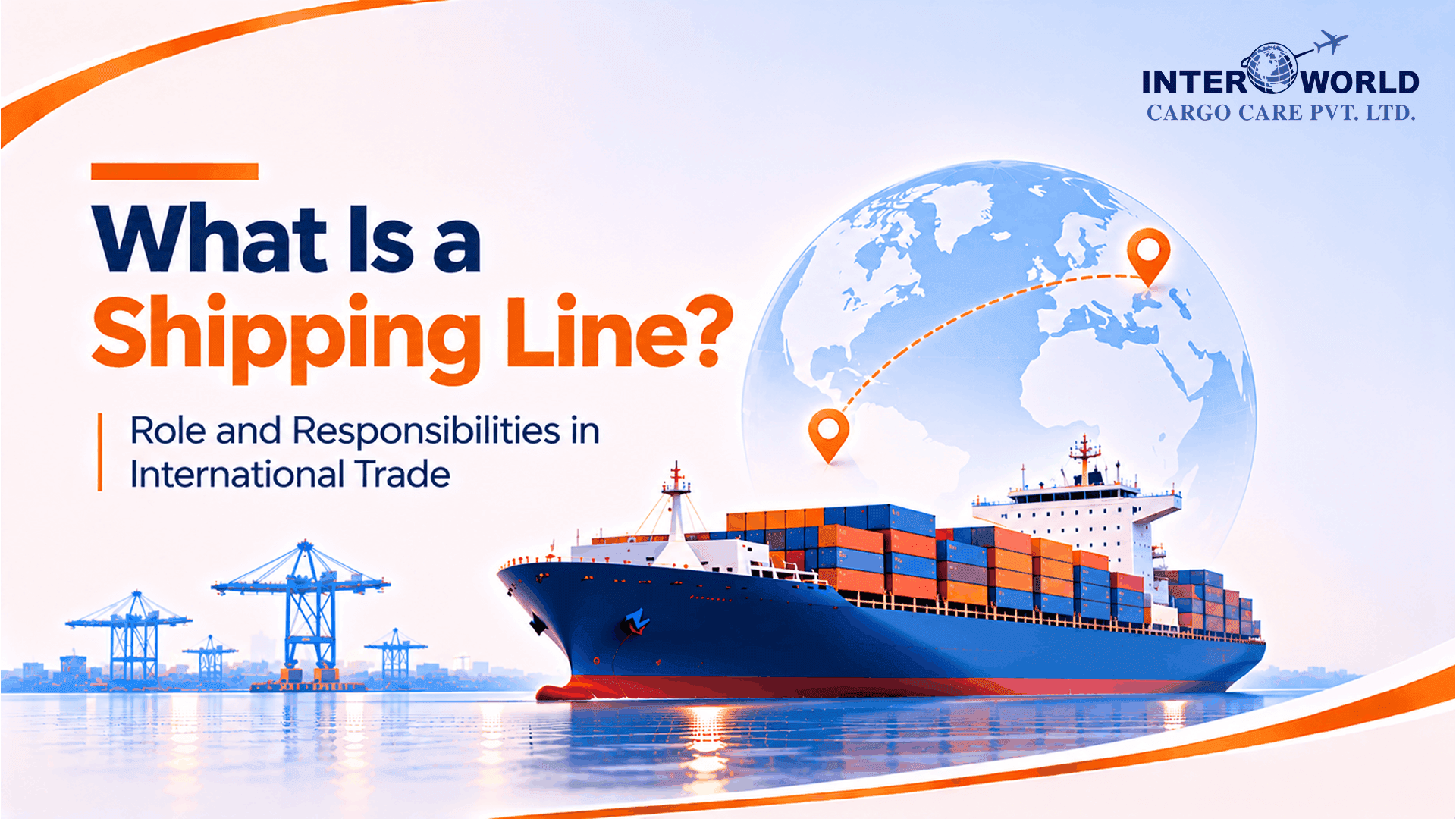
When your container crosses the ocean, a shipping line moves it. You may never speak to one directly, because your forwarder usually handles the booking. Yet the shipping line decides the schedule, the route, the free days at the port and what happens to your cargo if a vessel is full.
This guide explains the shipping line meaning, what a shipping line does, how it differs from a freight forwarder and an NVOCC, and what shippers should know before they book.
Shipping line meaning
A shipping line is a company that owns or operates ships and sells ocean transport for cargo. In container trade, it runs vessels on fixed routes with published schedules and regular port calls, and it carries goods for many shippers at once. It is also called an ocean carrier or, in technical terms, a vessel-operating common carrier (VOCC).
Well-known container shipping lines include Maersk, MSC, CMA CGM, COSCO Shipping, Hapag-Lloyd, Evergreen and ONE.
What does a shipping line do?
- Operates the vessels. It runs the ships, whether it owns them or charters them.
- Runs scheduled services. It sails fixed routes, called trade lanes, on published timetables.
- Provides containers. Most lines supply and own the containers used on their services.
- Sells space. It sells cargo space directly to large shippers or through forwarders, mainly for full containers and sometimes for shared containers.
- Sets routings and cut-offs. It decides ports of call, transit times, transshipment hubs and the deadlines for gate-in.
- Issues transport documents. It issues its own bill of lading or sea waybill for the cargo it carries.
- Publishes tariffs. It sets freight rates, surcharges and terms for detention and demurrage.
- Carries and delivers the cargo. It moves goods between ports and releases them at destination against the right documents.
Responsibilities of a shipping line
A shipping line takes on responsibility for the cargo while it is in its care. In practice, that means:
- Seaworthy vessel and proper care of cargo. The carrier must run the ship safely and handle the goods properly during carriage.
- Delivery against documents. It releases cargo only to the party entitled under the bill of lading.
- Accurate documentation. The bill of lading must reflect what was received and the condition of the cargo.
- Liability for loss or damage. Liability is governed by the transport contract and the conventions that apply to it, and is usually limited. That is why many shippers buy cargo insurance.
- Schedule and communication. It should notify shippers of delays, omitted ports and changes.
Carrier liability does not cover every loss. Packing, delay and other exclusions may apply, so check the terms on the bill of lading.
Shipping line vs freight forwarder vs NVOCC
| Party | Owns or operates ships | Role | Bill of lading |
|---|---|---|---|
| Shipping line | Yes | Carries the cargo on its vessels | Master bill of lading |
| NVOCC | No | Buys space from lines and resells it as a carrier to shippers | House bill of lading |
| Freight forwarder | No | Arranges the shipment, documents and clearance on behalf of the shipper | May issue a house bill or work on the line's bill |
An NVOCC, short for non-vessel-operating common carrier, acts as carrier toward its customers but does not run ships itself. A freight forwarder coordinates the move and may act as an agent or, in some cases, as an NVOCC. Our guide to freight forwarding explains this role in detail.
A shipping line is also different from "carrier" in general. A carrier is any company that moves goods by sea, air, road or rail. All shipping lines are carriers, but not all carriers are shipping lines.
Shipping lines and the shipper's paperwork
The shipping line sits at the centre of the sea freight documents:
- Booking confirmation. It confirms the vessel, sailing date, container type and cut-off times.
- Bill of lading. The line issues it after loading. It acts as a receipt, a contract of carriage and, in its original form, a document of title. See our guide to the bill of lading.
- Manifest. The line files the cargo manifest with customs.
- Delivery order. At destination, the line or its agent releases the cargo once charges are paid and the original documents are presented.
Charges you may see from a shipping line
- Ocean freight. The base rate for the route.
- Surcharges. Fuel, currency, peak season and other adjustments.
- Terminal handling charges. Collected for handling at the ports.
- Documentation fees. For bills of lading and amendments.
- Detention and demurrage. Charges when containers stay out or inside the port beyond the free days. Always ask for the free days in writing.
Ask your forwarder to itemise the quote so you can see what comes from the line and what is the forwarder's own fee.
How to choose between shipping lines
Most exporters and importers do not pick the line directly. Their forwarder does. But you can ask for a say, especially on regular lanes. Look at:
- Route and frequency. How often does it sail to your destination port?
- Transit time. Direct sailings are usually faster than those with transhipment.
- Reliability. How often does it roll cargo or skip ports?
- Free days. More free days can save money on detention and demurrage.
- Equipment availability. Can it supply the container type you need, such as a high cube?
- Rates and surcharges. Compare total cost, not only the base rate.
- Service during disruptions. Ask how it handles port congestion and rerouting.
Why use a forwarder instead of booking with a line?
Large shippers may contract directly with a shipping line. For most businesses, working through a forwarder is easier. A forwarder compares options across several lines, books the space, prepares the paperwork, arranges customs clearance and coordinates delivery. It can also place small shipments in shared containers. The forwarder's access to many lines gives you more choice than a single line can.
How IWCC works with shipping lines
Interworld Cargo Care works with more than 50 shipping lines and books the line and service that fit your cargo and deadline. Our sea freight service covers bookings, documentation and port coordination, with customs clearance on both ends.
Need help with your sea freight booking?
Share your cargo details and route, and we will arrange the right line and quote the full cost. Get a free quote or call 098110 59654.