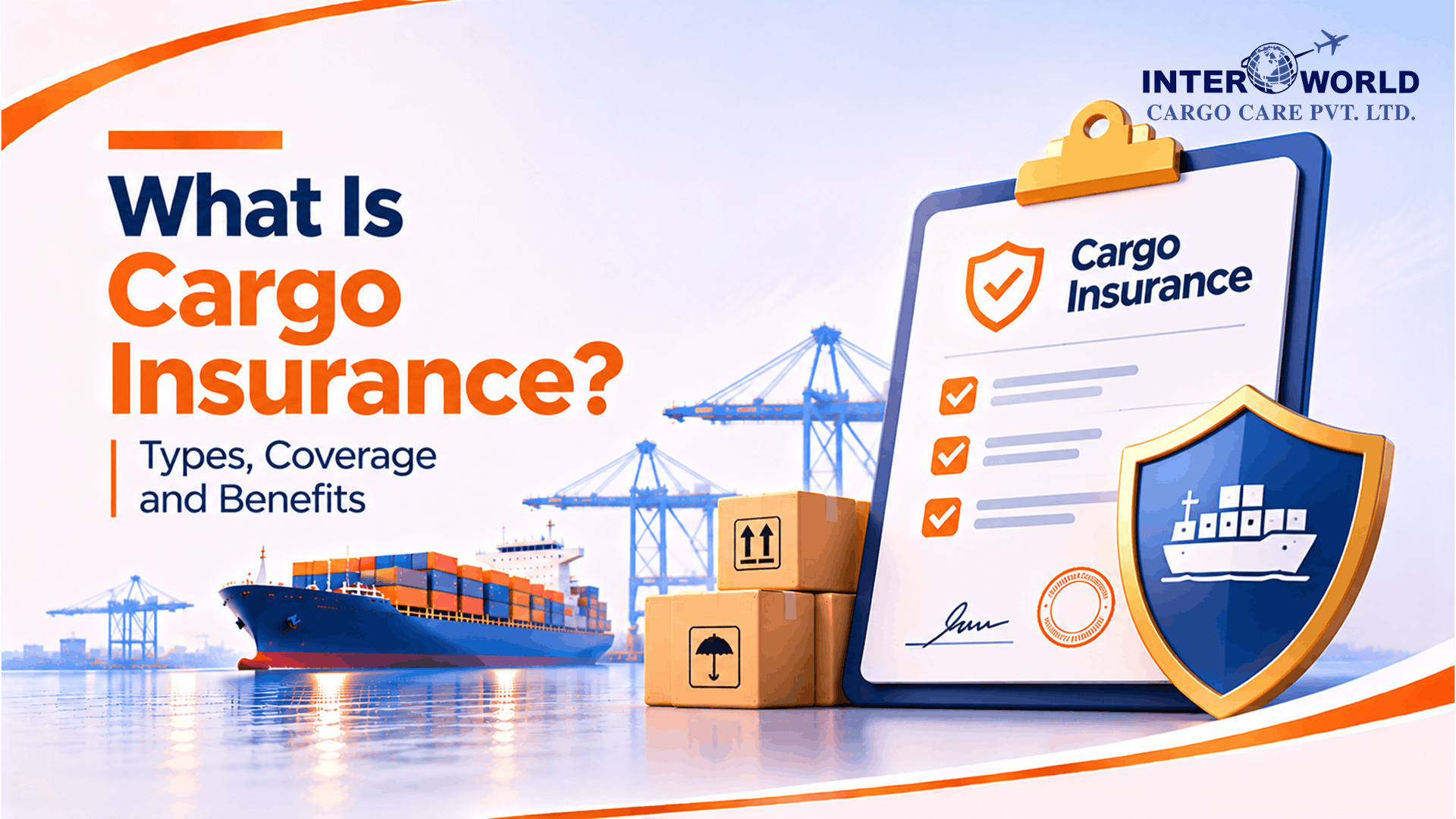
A container falls overboard in rough weather. A pallet is crushed at the port. A truck overturns on the way to the warehouse. In each case, the goods are gone and the buyer still expects delivery or payment. Cargo insurance is what keeps a single bad shipment from becoming a serious loss for the business.
This guide explains the cargo insurance meaning, the types of cargo insurance coverage, what is excluded, what affects the cost and how to claim.
Cargo insurance meaning
Cargo insurance, also called marine cargo insurance, is a policy that pays for loss of or damage to goods while they are in transit. Cover usually runs from the point where the goods are first moved for loading until they reach the agreed destination, and it applies to sea, air, road and rail legs when they are part of the same journey.
It is separate from the carrier's liability. A shipping line or airline may owe you something if it damages the cargo, but its liability is usually limited by the transport contract and often falls short of the full value of the goods. A claim against a carrier can also be slow. Insurance covers the shortfall and gives you a direct route to compensation.
Why cargo insurance matters
- Protects against loss. Fire, sinking, collision, theft, rough handling and similar events can destroy a shipment.
- Fills the gap in carrier liability. The carrier's payout may be far below what the cargo is worth.
- Covers general average. If the ship's owner declares general average after a major incident, cargo owners may have to pay a share of the loss, and insurance can cover it.
- Meets contract and bank requirements. Some sales terms and letters of credit require the seller to buy cover.
Types of cargo insurance coverage
Most marine cargo policies follow the Institute Cargo Clauses, known as ICC (A), (B) and (C). They differ in how wide the cover is.
| Clause | Type of cover | Typically covers |
|---|---|---|
| ICC (A) | All risks, subject to exclusions | Physical loss or damage from any external cause not specifically excluded, including theft and pilferage |
| ICC (B) | Named perils | Fire, explosion, vessel sinking or stranding, collision, earthquake, volcanic eruption, lightning, water entering the vessel or container, and packages lost overboard |
| ICC (C) | Narrowest named perils | Major casualties such as fire, explosion, stranding, sinking, collision, overturning of a vehicle and general average |
ICC (A) is the widest and the one most exporters and importers choose for general goods. ICC (B) and (C) cost less but leave more gaps. For example, theft and pilferage are not covered under the narrower clauses, and (C) does not respond to many weather-related losses.
Your sales terms may also set a minimum level. Our guide to Incoterms explains which party must arrange insurance under each rule and what level of cover is expected.
Types of cargo policy
- Single shipment policy. Covers one voyage. It suits businesses that ship occasionally.
- Open policy. Covers all shipments declared during a period. It suits regular shippers and avoids buying cover each time, usually with periodic declarations.
- Add-on clauses. War, strikes and riots are normally excluded unless added.
Warehouse-to-warehouse cover
Under the standard clauses, cover attaches when the goods are first moved in the warehouse at the origin for loading and continues through the journey. It ends on the earliest of these:
- Unloading at the final destination warehouse
- Unloading at another warehouse used for storage outside the normal course of transit
- Choosing to use a vehicle or container as storage
- 60 days after discharge at the final port, unless extended
If cargo may wait longer at the port, ask the insurer to extend the cover before it is needed.
What cargo insurance does not cover
Every policy has exclusions. The common ones include:
- Poor packing. Loss caused by insufficient or unsuitable packing.
- Inherent vice. Damage from the nature of the goods, such as rust on untreated metal or ripening of fruit.
- Ordinary leakage or wear and tear. Normal loss in weight or volume.
- Delay. Even if caused by an insured event.
- Carrier insolvency, subject to conditions.
- War, strikes and similar risks, unless added.
Read the policy wording and ask the insurer to explain any exclusion that matters for your goods.
What decides the cargo insurance cost?
Premium rates are set by each insurer and change with the market, so use quotes, not rule-of-thumb numbers. The main factors are:
- Value of the goods. The premium is calculated as a rate applied to the insured value.
- Clause chosen. ICC (A) costs more than (B) or (C).
- Type of cargo. Fragile, high-value, perishable or theft-prone goods carry higher rates.
- Route and mode. Some routes and ports have higher loss records.
- Packing and container type. Well-packed goods in sealed containers are lower risk.
- Add-ons. War and strikes cover, extended storage or special clauses add to the premium.
- Deductible. A higher deductible usually lowers the premium.
How much should you insure for?
A common practice is to insure for the invoice value plus a margin, often 10 percent, to cover expected profit and incidental costs. Many letters of credit and sales terms specify 110 percent of the CIF value. Check your contract and your bank's requirements before you buy the policy. Under-insuring leaves you short in a claim, and the cost of the extra cover is usually small.
How to buy cargo insurance in India
Confirm from your Incoterm and contract who must insure. Then choose the clause and policy type, and get quotes from general insurers or a marine insurance broker, asking for the policy wording and not only the price. Confirm the insured value and cover period, share the goods, route, packing and sailing date, and receive the policy or certificate before the cargo ships.
How to make a cargo insurance claim
- Note the damage on delivery. Record any visible damage on the delivery receipt and photograph it.
- Notify the insurer immediately. Policies set time limits, and late notice can harm the claim.
- Protect the cargo. Take reasonable steps to limit further loss.
- Notify the carrier in writing. This protects your right to claim against the carrier, which the insurer may also pursue.
- Arrange a survey. The insurer may appoint a surveyor to assess the loss.
- Gather documents. Typically the policy or certificate, commercial invoice, packing list, bill of lading or airway bill, survey report and correspondence with the carrier. Our guide to the bill of lading explains why that document matters.
- Submit and follow up.
How IWCC helps
Interworld Cargo Care has moved cargo since 1993. We help you check the insurance terms in your sales contract, align the bill of lading and invoice with your policy and coordinate with your insurer if a claim arises.
Protect your next shipment
Tell us what you ship and where, and we will help you plan the cover and the paperwork. Get a free quote or call 098110 59654.