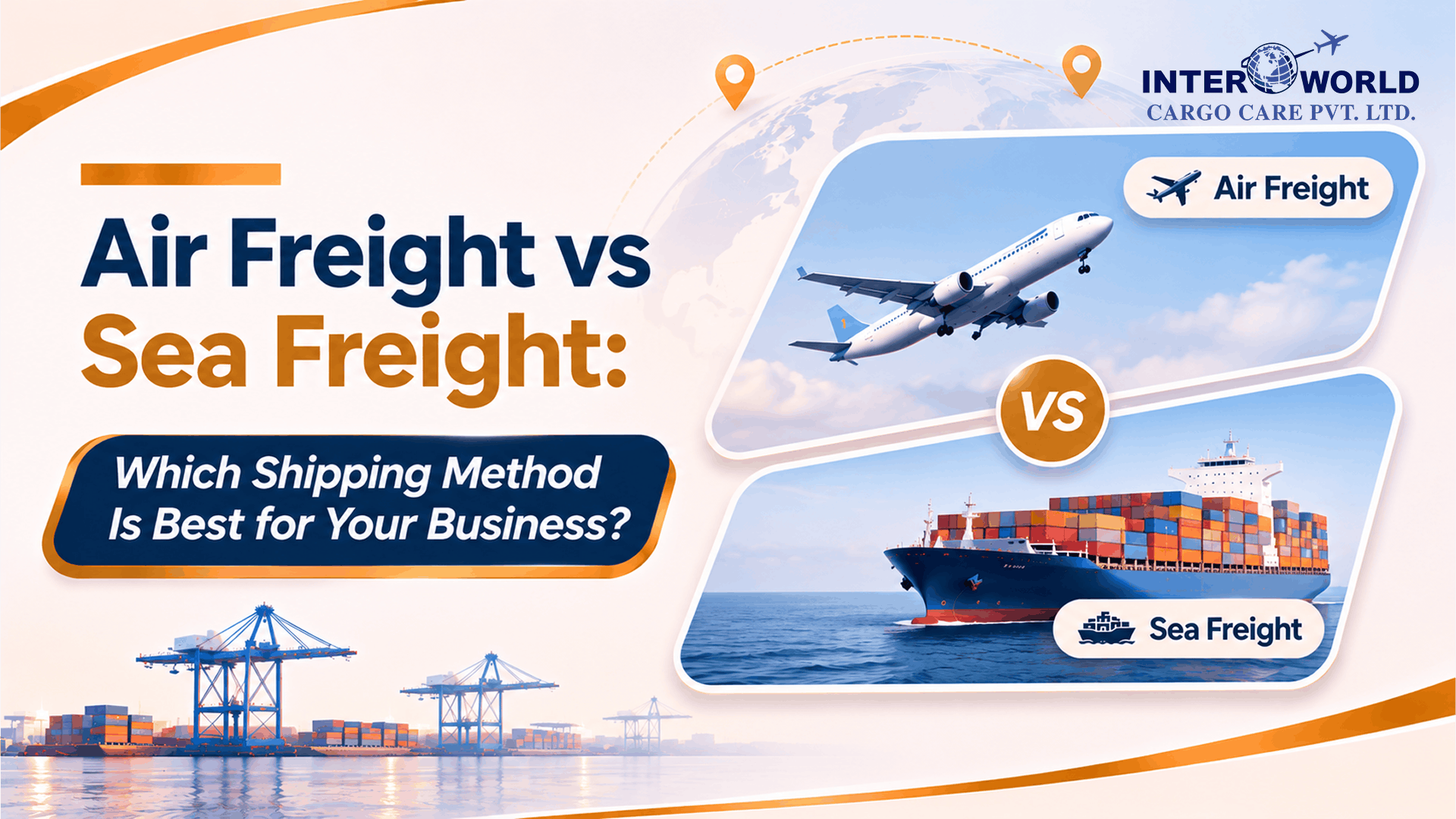
Every exporter and importer faces the same choice sooner or later. Pay more and get the goods there in days, or pay less and wait weeks. The right answer depends on your cargo, your deadline and your margin.
This guide explains what air freight and ocean freight are, how they differ on cost, speed, capacity, risk and emissions, and how to decide which one fits a particular shipment.
What is air freight?
Air freight means moving goods by aircraft. Cargo travels either in the belly of passenger planes or on dedicated cargo aircraft. It is priced on chargeable weight, which is the higher of actual weight and volumetric weight, and it is used for urgent, valuable or time-sensitive goods.
Typical air freight cargo includes electronics, pharmaceuticals, fashion samples, spare parts, perishables and e-commerce orders.
What is ocean freight?
Ocean freight, also called sea freight, means moving goods on cargo ships. Most cargo travels in containers, either a full container load (FCL) for one shipper or less than container load (LCL) where several shippers share a container. Larger and heavier items may travel as breakbulk or on roll-on roll-off vessels.
Ocean freight is the main way the world moves bulk, heavy and non-urgent goods, such as machinery, textiles, building materials, furniture and packaged food.
Air freight vs ocean freight at a glance
| Point | Air freight | Ocean freight |
|---|---|---|
| Speed | Days | Weeks |
| Cost per kg | High | Low |
| Capacity | Limited by aircraft size and weight | Very large |
| Best for | Urgent, light, high-value, perishable goods | Heavy, bulky, non-urgent goods |
| Pricing basis | Chargeable weight | Container size or volume |
| Schedule reliability | Frequent departures | More affected by port and weather delays |
| Handling | Fewer touchpoints | More handling at ports |
| Emissions per tonne | Much higher | Much lower |
Differences between air freight and ocean freight
Transit time
Published comparisons put air transit at roughly 1 to 7 days and ocean transit at roughly 20 to 45 days, depending on the route. Real timelines also include pickup, customs clearance, port or airport handling and final delivery, so allow extra time at both ends. Ocean routes can lengthen further when ports are congested or ships are rerouted.
Cost
Air freight costs far more per kg than sea freight. Air is charged on chargeable weight, with fuel and security surcharges on top. Ocean is charged mainly by container, so the cost per unit falls as the container fills. For small, light and valuable items the gap in absolute cost can be modest. For heavy or bulky goods, air is rarely practical.
Always compare the total landed cost, not only the freight line. Sea freight adds longer storage and inventory holding costs. Air freight adds a higher freight bill but frees up cash faster.
Capacity and size limits
Aircraft have strict size and weight limits for each piece. Oversized and heavy cargo usually cannot fly, or needs a special freighter. Ships carry containers of standard sizes and also take odd-shaped and heavy cargo. Our guides on container shipping and RoRo shipping show the main options.
Reliability and risk
Air has frequent departures and fewer handling steps, which lowers the chance of damage and theft. If a flight is cancelled, cargo can often move to the next one within a day or two. Ocean freight has fewer sailings per week on many routes, and a missed sailing can mean a delay of several days. Port congestion and weather can add more.
Environmental impact
Air freight produces far more greenhouse gas emissions per tonne of cargo than sea freight. If sustainability reporting matters to you or your buyers, shifting suitable cargo to sea can reduce your footprint. Ask your forwarder for emissions data on the routes you use.
Documents and customs
The core paperwork is similar for both. You need the commercial invoice, packing list and a transport document. For air this is the airway bill, and for sea it is the bill of lading. Customs filing follows the same basic rules. See our guide to the bill of lading for the sea side.
When to choose air freight
- Urgent orders. A customer deadline, a production stoppage or a stock-out.
- High-value goods. Fast delivery lowers inventory cost and theft exposure.
- Perishables and time-sensitive products. Flowers, fresh produce, medical supplies and temperature-sensitive items.
- Light and small shipments. Small volumes do not justify a full container.
- Samples and prototypes. Speed matters more than freight cost.
- New product launches. Getting stock to market quickly can outweigh the cost.
When to choose sea freight
- Heavy or bulky cargo. Machinery, furniture, building materials and similar goods.
- Large volumes. Full containers bring the lowest cost per unit.
- Planned replenishment. Regular stock orders with predictable lead times.
- Low-margin goods. Where freight cost would otherwise wipe out profit.
- Oversized items. Cargo too large or heavy for an aircraft.
- Sustainability goals. Lower emissions per tonne of cargo.
Can you combine air and sea?
Yes. Many businesses use both. Sea freight carries the main stock at low cost, and air freight covers urgent top-ups or peak-season gaps. Some routes also offer sea-air combinations, where cargo goes by ship to a transit hub and then by air to the final destination. These can sit between the two in cost and time.
A common approach is to ship the bulk of an order by sea and send a smaller portion by air to cover the first weeks of sales.
A quick decision guide
Ask these questions before you book:
- How soon do I need the goods? Days point to air, weeks to sea.
- How heavy and bulky is the shipment? The heavier and bulkier it is, the stronger the case for sea.
- What is the value per kg? High-value goods can absorb air freight costs better.
- What does a delay cost me? Lost sales or a stopped production line favour air.
- How much stock do I hold? Large safety stock allows slower, cheaper sea freight.
- Does the product need special conditions? Perishables and sensitive goods may need air.
How IWCC helps you choose
Interworld Cargo Care has moved cargo since 1993 and handles both modes. Our air freight and sea freight teams compare the options for your cargo, so you can see the cost and timeline of each side by side.
Not sure which mode to use?
Tell us what you ship, how much and by when, and we will compare both options. Get a free quote or call 098110 59654.