Every shipment has a payer for the freight. The question is who pays and when. Get it wrong and cargo can sit at the destination port while two businesses argue over an invoice.
Freight prepaid and freight collect are the two standard answers. This guide explains what each means, how they show up on documents, how they connect to Incoterms and how to choose between them.
Freight prepaid meaning
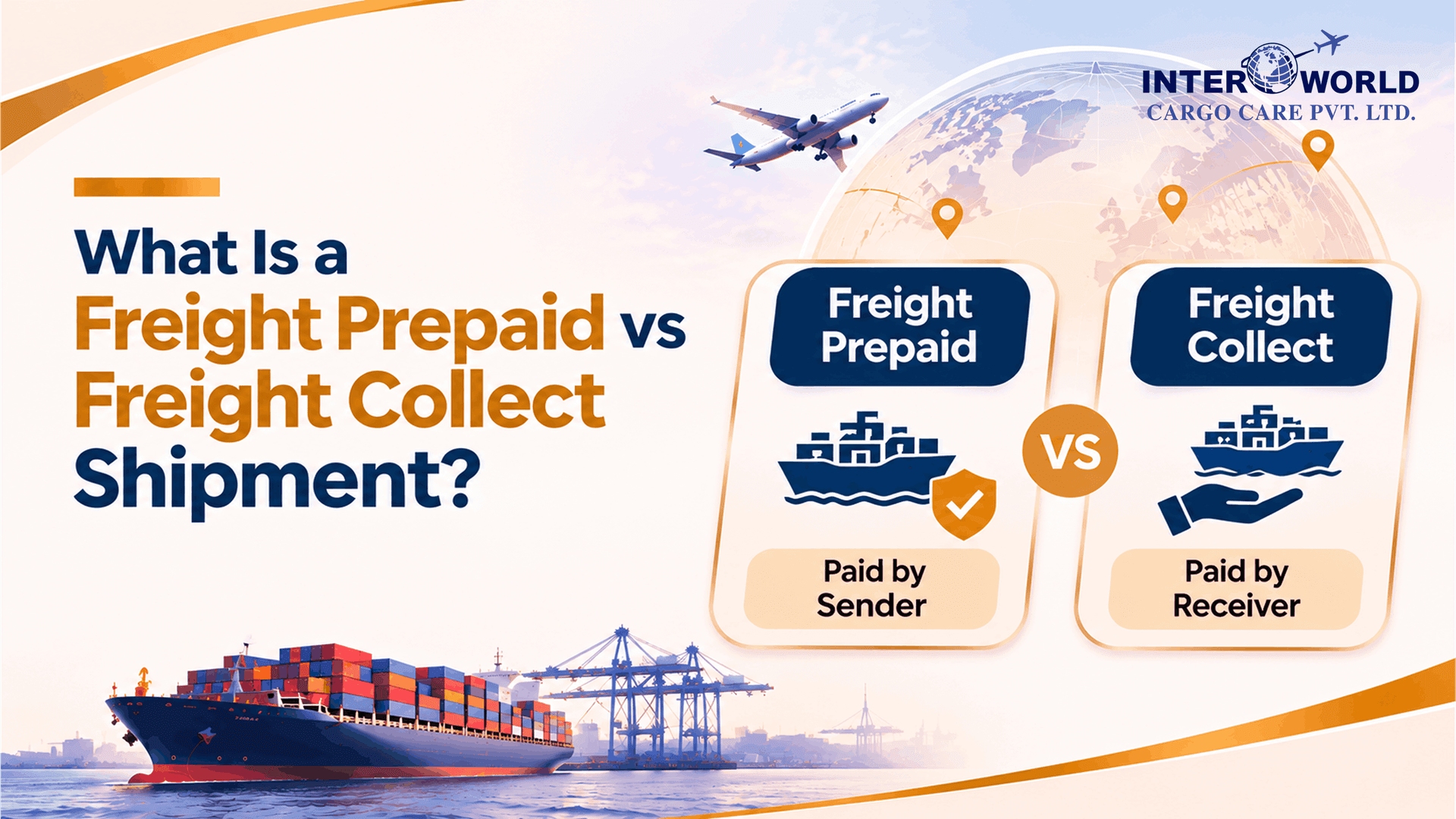
Freight prepaid means the shipper, also called the consignor, pays the freight charges at the start of the journey. The carrier or forwarder is paid before or when the cargo is handed over, and the bill of lading is marked prepaid. The consignee usually receives the goods without a freight invoice from the carrier.
The seller often builds the freight into the price of the goods, so the buyer sees one invoice.
Freight collect meaning
Freight collect means the consignee, who is the buyer or receiver, pays the freight at the destination. The carrier or its agent collects payment before releasing the cargo, and the bill of lading is marked collect. Freight is billed separately from the goods and is not part of the sale price.
Buyers who want to choose their own carrier and negotiate their own rates often prefer collect shipments.
Freight prepaid vs freight collect at a glance
| Point | Freight prepaid | Freight collect |
|---|---|---|
| Who pays | Shipper | Consignee |
| When | At origin | At destination |
| Bill of lading | Marked prepaid | Marked collect |
| Who picks the carrier | Usually the shipper | Often the consignee |
| Cash flow | Shipper funds the freight | Buyer pays on arrival |
| Main risk | Shipper carries the cost until paid back | Cargo held if the consignee does not pay |
| Common with | Sellers who quote delivered prices | Buyers who buy ex-works or FOB |
How freight terms link to Incoterms
Freight prepaid and collect decide who pays. They do not decide who owns the goods or who carries the risk in transit. Incoterms cover that, and the two should agree. Our guide to Incoterms explains each rule in full.
In practice, the pairing follows a pattern under Incoterms 2020:
- Seller arranges and pays the main carriage, so freight is usually prepaid. CFR, CIF, CPT, CIP, DAP, DPU and DDP.
- Buyer arranges and pays the main carriage, so freight is usually collect. EXW, FCA, FAS and FOB.
For example, a CIF sale means the seller pays freight and insurance to the named port, so the bill of lading says prepaid. An FOB sale means the buyer pays the ocean freight from the port of loading, so the bill of lading says collect.
Mixed cases exist. A seller may sell FOB but agree to book the ship for the buyer's convenience, with the freight shown as prepaid and added to the invoice. Always write the arrangement in the contract.
What the bill of lading shows
The freight term appears on the bill of lading as prepaid or collect. Banks check it against the letter of credit, and the consignee relies on it to know what to pay at destination. A wrong entry can delay release of cargo or cause a bank to reject documents. If you need to know what else the document carries, our guide to the bill of lading lists the required details.
Prepaid does not always mean everything is paid
Even on a prepaid shipment, some charges can fall on the consignee. Ocean freight and origin charges are usually covered. Destination charges, such as terminal handling at the port of arrival, delivery order fees, customs duty and local transport, are often paid by the consignee. Confirm exactly which charges are included before you agree to a prepaid or collect term. Our guide on how to calculate international freight charges shows how a quote is built up.
Advantages and risks
Freight prepaid
Advantages
- The shipper controls the carrier and the rate.
- The buyer avoids a separate freight bill and has fewer surprises.
- The shipper faces less risk of a payment dispute at the destination.
Risks
- The shipper funds the freight upfront, which strains cash flow for smaller businesses.
- The shipper takes on more admin work and, often, more responsibility if something goes wrong in transit.
- Disputes arise if the buyer believes a cheaper rate was available.
Freight collect
Advantages
- The buyer controls the carrier and negotiates the rate.
- The buyer pays only once the cargo arrives, which helps cash flow.
- The seller has less to arrange and invoice.
Risks
- If the consignee delays payment, the carrier can hold the cargo, and storage and container delay charges build up.
- The shipper depends on the consignee to pay, and a carrier may look to the shipper if the consignee does not.
- The buyer has little say in the carrier when the seller books the shipment.
Which should you choose?
- Choose freight prepaid if you sell on a delivered basis, want control of the carrier or are building trust with a new buyer. It suits smaller shipments with few expected extra charges.
- Choose freight collect if the buyer has a preferred forwarder, wants to use negotiated rates or buys on ex-works or FOB terms. It suits established partners and larger shipments, including full containers.
- Think about cash flow. Who can afford to fund the freight for several weeks?
- Think about risk. If the buyer is new or in a market with payment risk, prepaid or advance payment protects you better.
- Match it to the contract. The freight term, Incoterm and invoice should all say the same thing.
Common mistakes
- Marking the bill of lading collect when the contract says CIF
- Not stating which destination charges the buyer will pay
- Agreeing collect with a buyer who has not confirmed they will accept the cargo
- Leaving the freight term off the invoice
- Treating freight terms as a transfer of ownership or risk
How IWCC helps
Interworld Cargo Care arranges freight under either term and checks that the bill of lading matches your contract. Our sea freight team prices origin and destination charges separately, so you know what is included before you book.
Need help setting up your shipment terms?
Share your sales terms and route, and we will confirm who pays what at each stage. Get a free quote or call 098110 59654.