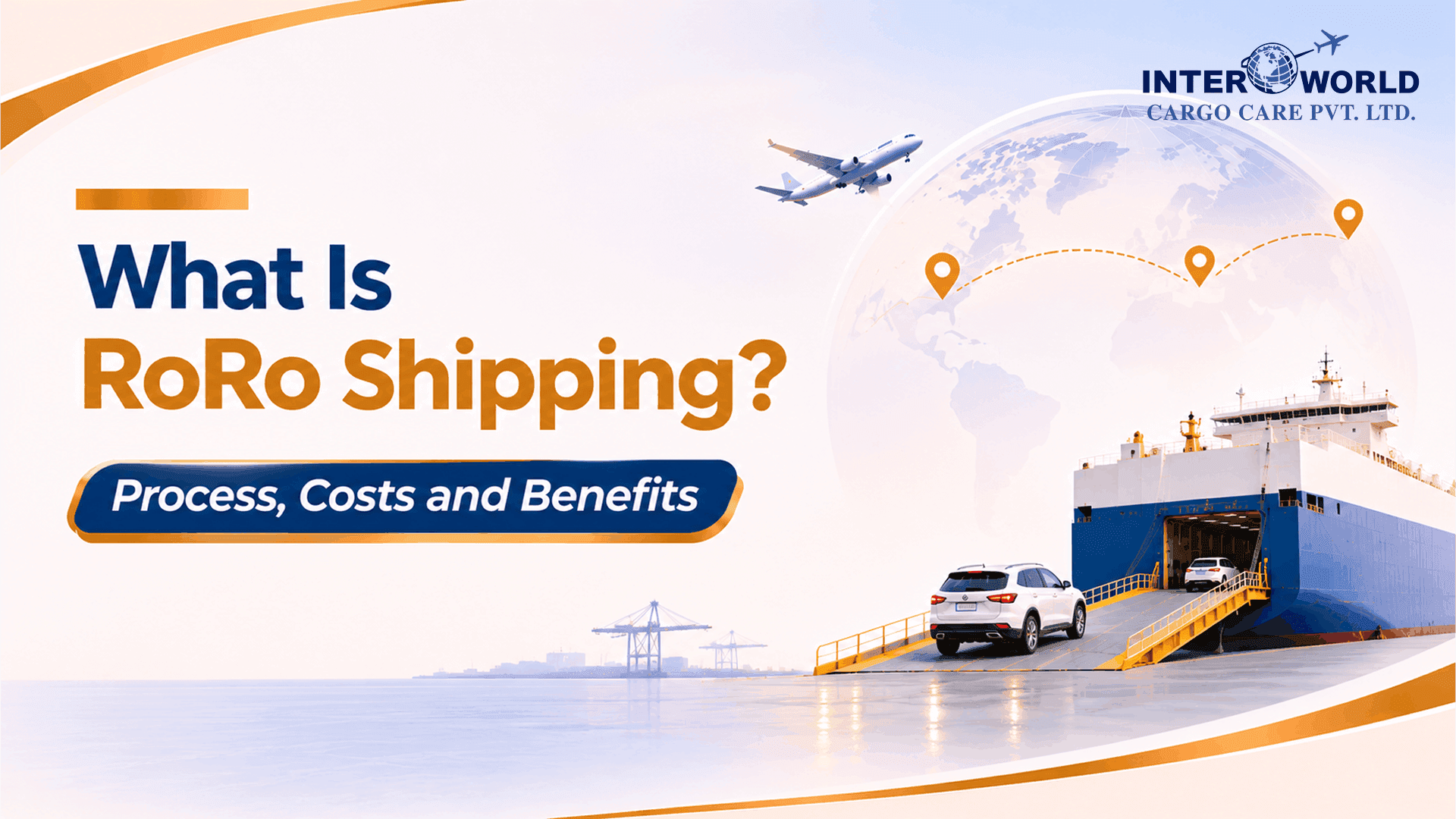
Most sea cargo is lifted into a ship by a crane. Vehicles and other wheeled cargo do not need a crane at all. They drive on at the loading port and drive off at the destination. That method is called RoRo shipping.
This guide explains what RoRo means, how the process works, what you can ship, what it costs and how it compares with a container.
RoRo meaning
RoRo stands for roll-on roll-off. It describes ships with built-in ramps that let wheeled cargo move straight on board and straight off again. The cargo either drives itself or is towed or pulled onto the vessel by port equipment.
When people search for "RoRo meaning" or "RoRo shipping meaning", they usually mean this vehicle-carrying method. It is the main way cars, trucks and many types of heavy equipment move overseas.
What can you ship by RoRo?
- Cars, SUVs, vans and motorbikes
- Trucks, buses and trailers
- Agricultural machines, such as tractors
- Construction equipment, such as loaders and excavators
- Industrial vehicles and mobile equipment
- Boats on trailers
- Heavy or oversized wheeled units that would not fit a container
Cargo that cannot roll, such as loose boxes or palletised goods, normally does not suit RoRo. It goes by container or breakbulk instead.
Types of RoRo vessels
- PCC and PCTC. Pure car carriers and pure car and truck carriers. Multi-deck ships built to carry large numbers of vehicles.
- RoPax. Combine RoRo cargo space with passenger accommodation, usually on shorter routes.
- ConRo. Combine container and RoRo capacity, with vehicles on the lower decks and containers above.
- RoLo. Allow roll-on loading and lift-off unloading with a port crane.
How RoRo shipping works
- Quote and booking. You share the vehicle type, make and model, dimensions, weight, origin and destination. The forwarder books space on a RoRo sailing.
- Documents. For an export you need the commercial invoice, registration papers where applicable, the shipping bill and the bill of lading. Used vehicles often need extra paperwork and import rules at the destination.
- Vehicle preparation. Vehicles are usually cleaned, checked for leaks and delivered with limited fuel. Personal belongings are normally not allowed inside. Requirements vary by carrier, so ask for the written rules.
- Delivery to the port. The vehicle goes to the RoRo terminal before the cut-off.
- Inspection and loading. The condition of each unit is recorded. Vehicles are then driven up the ramp, parked on the decks and lashed with straps or chains.
- Sea transit. The ship sails to the destination port, often calling at several ports on the way.
- Discharge. Vehicles are driven off the ramp, inspected and moved to the yard.
- Customs and release. Import clearance is completed and the vehicle is collected or delivered to the consignee.
Our sea freight service handles booking and port coordination, and we can arrange clearance on both sides.
Advantages of RoRo shipping
- Fast loading and unloading. Vehicles drive on and off, which shortens time at the port.
- Fewer handling steps. There is no crane lift for each unit, which lowers the chance of damage during loading.
- Good for oversized wheeled cargo. Units too tall or wide for a container can still travel.
- Direct movement at the destination. The vehicle is driven out of the port and does not need unpacking from a box.
- Regular services on busy trades. Large vehicle exporters run scheduled RoRo lines on established routes.
- Lower handling cost per unit at volume. Carriers price by space on deck, which can be economical for full vehicle consignments.
Limitations to know
- Less protection from weather and theft than a sealed container, although vehicles are inside the ship's decks.
- Limited cargo types. Only wheeled or rollable cargo qualifies.
- Personal items inside vehicles are generally not permitted and are not covered.
- Fewer ports and sailings than container services, so routes may be less flexible.
- Used vehicles can face import restrictions in the destination country, such as age limits and emission rules.
RoRo vs container shipping for vehicles
| Point | RoRo | Container |
|---|---|---|
| Method | Driven on and off | Loaded into a box and lifted |
| Protection | Inside the ship, open to others on deck | Sealed container |
| Vehicle type | Driveable vehicles and wheeled machines | Cars, bikes and smaller vehicles that fit |
| Cost | Often lower for full vehicle loads | Can be lower when sharing a container |
| Personal items | Usually not allowed | Often allowed, subject to customs rules |
| Best for | Fleet exports, new cars, heavy equipment | Single vehicles, high value cars and non-running vehicles |
For a single high value car or a vehicle that cannot run, a container often makes sense. For large numbers of vehicles or oversized equipment, RoRo is usually the better route. See our guide to container shipping to compare the two.
RoRo shipping costs
Carriers price RoRo by the space a unit takes on deck, so size matters more than weight. Costs usually include:
- Ocean freight. Priced by vehicle dimensions, often by cubic metre or per unit.
- Origin charges. Port handling, terminal fees, documentation and export clearance.
- Destination charges. Port handling, terminal fees and delivery.
- Insurance. Marine cargo insurance is advisable for vehicles.
- Duty and taxes. Import duties on vehicles can be high in many countries.
- Surcharges. Fuel, currency and seasonal charges.
Always ask for an itemised quote that states the unit dimensions it is based on. A wrong measurement is the most common reason a RoRo invoice changes.
RoRo shipping from India
India exports passenger cars, two-wheelers, commercial vehicles and farm equipment. Vehicle makers ship from ports with dedicated car terminals, and used vehicles and machinery move through forwarders. Rules for exporting second-hand vehicles and for importing into the destination vary, so confirm both before you book. Our team can check this for your route.
How to prepare a vehicle for RoRo
- Clean the vehicle inside and out.
- Remove personal items and loose accessories.
- Leave only a small amount of fuel, as the carrier requires.
- Disable or note alarms and check batteries.
- Photograph the vehicle from every side.
- Note existing damage on the inspection report.
- Carry spare keys and documents.
How IWCC supports vehicle and equipment shipments
Interworld Cargo Care has moved cargo since 1993 and works with more than 50 shipping lines. We arrange RoRo and container options for vehicles and heavy equipment, prepare the shipping bill and bill of lading, and coordinate delivery. Our freight forwarding team can compare both methods for your cargo.
Plan your RoRo shipment
Send us the vehicle details and route, and we will compare RoRo and container options. Get a free quote or call 098110 59654.