Some cargo is light but bulky. A container fills up long before it reaches its weight limit, and you end up paying for space you cannot use well. A high cube container solves that problem by adding height.
This guide explains what a high cube container is, what the HC code means on a booking, the dimensions of each size and when it is worth choosing over a standard box.
What is a high cube container?
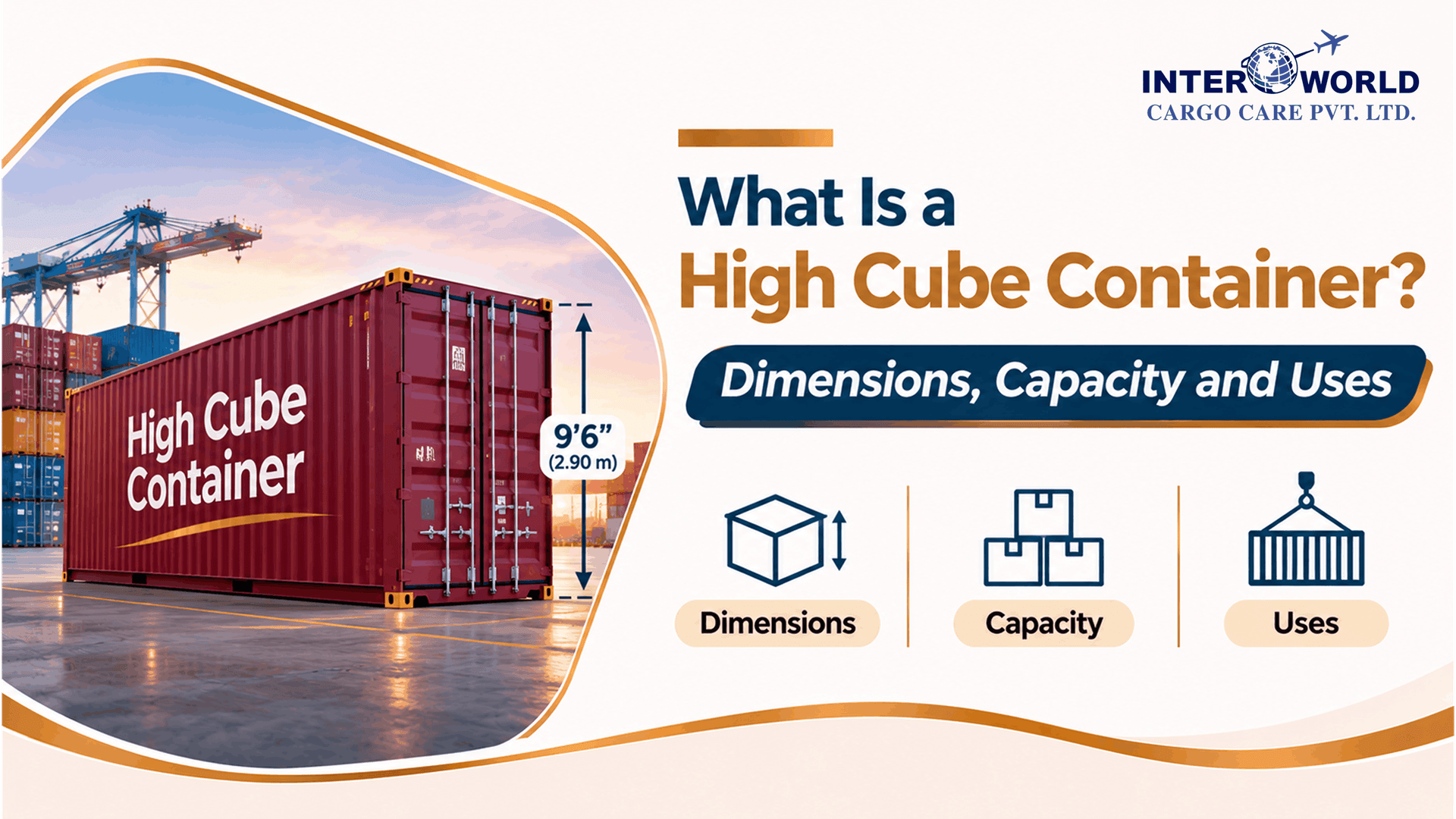
A high cube container is a shipping container that is taller than the standard version. A standard container is 8 feet 6 inches high on the outside. A high cube is 9 feet 6 inches, which is one foot or about 30 cm more. Length and width stay the same, so it fits on the same ships, trucks and rail wagons that handle standard containers, subject to height limits on the route.
That extra foot adds roughly 10 percent more internal volume. It also lets you stack taller cargo or load more layers of cartons.
HC container meaning
HC is the short code for high cube. You will see it in container type codes, such as 40HC or 40'HC, on booking confirmations, bills of lading and carrier tariffs. Some carriers and trade documents use HQ, which also means high cube. If a quote says 40HC, the carrier is offering a 40 foot high cube container.
High cube container dimensions
Approximate internal dimensions for the sizes you are likely to meet:
| Container | Internal length | Internal width | Internal height | Internal volume |
|---|---|---|---|---|
| 20ft high cube | 5.90 m | 2.35 m | 2.70 m | About 37 cubic metres |
| 40ft high cube | 12.03 m | 2.35 m | 2.70 m | About 76 cubic metres |
| 45ft high cube | 13.56 m | 2.35 m | 2.70 m | About 86 cubic metres |
| 53ft high cube | About 16 m | About 2.5 m | About 2.7 m | About 105 to 110 cubic metres |
For the 40 foot and 45 foot sizes, published specifications list a door opening of about 2.34 m wide and 2.60 m high, and a payload in the range of 27 to 29 tonnes. Exact figures vary by manufacturer and shipping line, so ask your forwarder for the specification of the box you will receive.
20ft, 40ft, 45ft and 53ft high cube: what to know
- 20ft high cube. It exists but is not common. Most lines stock far more 20 foot standard boxes. Availability depends on the route, so confirm before you plan a load around it.
- 40ft high cube. The most widely used high cube size and the default choice for many importers and exporters. Most major lines supply it on most trade lanes.
- 45ft high cube. Used on selected routes, mainly in Europe and some Asian trades. Fewer ports and trucks are set up for the extra length, so check the origin and destination handling.
- 53ft high cube. Used for domestic freight in North America and not an ISO sea container. You will not usually book it for an Indian export. It matters if your cargo continues by road or rail inside the United States.
High cube vs standard container
| Point | Standard 40ft | 40ft high cube |
|---|---|---|
| External height | 8 ft 6 in | 9 ft 6 in |
| Internal volume | About 67 cubic metres | About 76 cubic metres |
| Payload | About 26 to 29 tonnes | Similar to standard |
| Rate | Base rate | Often the same or slightly higher |
| Best for | Dense, heavy cargo | Light, bulky or tall cargo |
The key point is that a high cube gives you more space, not more weight capacity. Dense cargo such as tiles, metal parts or liquids in drums will reach the weight limit before the extra height helps.
When to use a high cube container
- Light, bulky goods. Furniture, garments, plastics, packaging, cushions and toys use volume faster than weight.
- Tall cargo. Machinery or equipment that is just too tall for a standard box.
- Palletised cargo stacked high. An extra layer of pallets can mean fewer containers overall.
- Cost per cubic metre. When the rate is close to a standard box, the extra volume lowers the cost per unit shipped.
When a standard container is better
- Your cargo is heavy and dense.
- The route has height limits on roads, bridges or rail that a 9 foot 6 inch box cannot clear.
- The origin or destination yard has no handling for taller boxes or lacks stock.
- You are shipping a small volume. In that case, consider LCL instead of any full container.
Road and rail limits matter in India, so confirm the transport route before you book a high cube, especially for inland container depots.
How to load a high cube container
- Plan the stow. Place heavy items low and centred, and light items on top.
- Use the full height safely. Stack only to the point cartons can bear. Add dunnage or airbags to stop movement.
- Respect the weight limit. Check the maximum gross weight printed on the door.
- Match the paperwork. The container number, seal number and cargo details should agree across the invoice, packing list and bill of lading.
- Ask about the door opening. Tall cargo must fit through the door, not just inside the box.
Costs to plan for
A high cube is usually priced the same as a standard box of that length or a little higher, depending on the line, route and season. You will still pay origin and destination handling, documentation, customs clearance and any container delay charges. For the wider picture of how container pricing works, read our guide to container shipping.
How IWCC helps you choose the right container
Interworld Cargo Care works with more than 50 shipping lines and plans container type, loading and booking for each shipment. Our sea freight service compares high cube and standard options against your cargo volume and weight, so you pay only for the space you need. If your cargo fills a full box, our guide to FCL shipping explains how that option works.
Get the right container for your cargo
Send us your cargo volume, weight and route, and we will recommend the container type and quote the full cost. Get a free quote or call 098110 59654.